Wednesday, June 10, 2015

Final Art Blog Post

one. looking back over the course of the year, and your blog posts, which project or projects were the most engaging for you? Where did you fully own your process as an artist? where did you get lost in the material or the making of work?  
Despite not quite being my best piece of work, the house of my mind project was probably the most engaging. The house of my mind project allowed me to reflect on myself in order to express myself through this project. It was in this project that I "fully owned" my process as an artist, employing many different conceptual, formal, and technical intentions. This project allowed me to immerse myself in my work, often getting "lost" in the process.

two. you have had a year of tremendous artistic growth. where do you see that you have grown the most? think about the studio habits as you answer and explain--observe, stretch and explore, craft, express, understanding the art world, reflect. which of these areas do you feel the most comfortable with? how do you see that comfort showing up in your creative practice?
I feel that I can see my tremendous growth when I look back and see my previous work. Through the year, my work continually improves, my newest project exceeding my last. I have also been further acquainted with proper studio habits and tools, which demonstrates my heightened comfortability with the class. I feel mot comfortable when I look at the art world and look at other art, it gives me a fresh perspective on how others express their intentions through their art. I feel that I can now look at a piece of art and truly understand what it means. An image no longer looks like an image, but an emotion; I can understand what other artist are trying to convey, how they are trying to convey it, and gain a full comprehension of the image, thanks to art.


three. think about the things we've studied this year--fibonacci, light as a character, abstraction, the darkroom, portraits, photoshop techniques, the off-camera flash and studio lights. discuss a few of these themes that are the most engaging for you. what have you learned about them? how do you have a better understanding of them?
The most engaging techniques that we used throughout the year were the use of rule of thirds and light as a character. Despite how shallow rule of thirds can be as a technical intention, I really like using it because symmetry is engaging for me, just as it creating a story through my work. Rule of thirds allows me to create a contrast in my depth of fields, making the art more interesting and engaging to the viewer. Light as a character also struck me as one of the more interesting tunics that we learned because it, too, allows one to tell a story, it draws the viewers eyes, allows for directional movement, and makes the image more interesting.


four. course evaluation. which assignments were the most successful? which assignments were the most frustrating? What are one or two things that Ms. Seal does really well? What is one important peice of advice that you would offer her so that she could make this class better?
I feel that the house of my mind was the most engaging and in depth project, whereas my light as a character was likely my most successful and interesting project. Ms. Seal is really good with engaging with the students and giving them critique as to how they can do better. Besides being at school on time :), she could also work on perhaps creating a more interactive learning experience. Thank you so much for a great year! :D

Wednesday, June 3, 2015

Final Blog Post

one. your conceptual intention. what is it for this project? how is your conceptual intention expressed in this series or project?
My conceptual intentional was light as a character. For one half of my project I decided to play with lighting, not necessarily while taking the photos, but while editing them. I chose a few colors to enhance while dimming others. The other half, I decided to play around with placing light in a concentrated area of the photo, illuminating the rest of the image. I feel that my usage of light was strong and that I do understand how to use it.

two. your formal intention. what is it for this project? how is your formal intention expressed in this series or project?
My formal intention was the usage of rule of thirds to separate and/or distance one part of an image from the rest.

three. your technical intention. what is it for this project? how is your technical intention expressed in this series or project?
My technical intention was using depth of field. Similarly to my intention with rule of thirds, using depth of field to distance the min focus of the image from the background. I primarily used a shallow depth of field so as to create more separation from the focus to the rest of the image.

four. what did you take away from the critique? what comments resonated with you?
five. were you able to use the freedom this assignment afforded you to your advantage? if the structure was helpful, how so? if it wasn't helpful, what would have made it more so?
Although I have not yet participated in the class critique, I look forward to receiving more advise about my images.
 Please also upload your series or image to your blog along with these reflections questions.

Friday, May 22, 2015

Final Project In-Process Reflection


For this final project, I am attempting to utilize rule of thirds, light as a character, and depth of field. I feel that these two photos exemplify the path that I am going to take and the reality that I am going to challenge. By making certain qualities and colors in an image stand out more than the others, I am trying to create a more expressive, more interesting compilation of images. I am not going to veer towards focusing on the composition of the photo, and the object that it is of, but I am going to take an object and try to make the audience question reality. Although many of the images in the end may very well not be abstract, I am going to try to have the same effect on my audience as abstract images does on its audience.

Monday, May 11, 2015

My Abstract Work

I feel like this image is my strongest of this abstract project. I played with colors, using black and white, and feel like my intentions were founded on a strong understanding of abstract (or at least in this instance). This image intrigues me because of the contrast between black on white, along with the changing geometric shapes. I found abstract moments wherever and whenever, actually taking this picture no more than three hours ago, in my room. This only goes to show that no matter where or when you look around, abstractness will always be present, you just have to look closer.

I gained a better understanding of the digital camera and photoshop with experience. I admit, while I may not have been so strong at using them in the beginning, I definitely improved (but am still horrendous with photoshop). My favorite photoshop tool was the filters, playing with color and how it affected the composition and mood of the image. Overall, I feel like this project was one of my stronger ones, and gained a much stronger understanding of the concept of "abstract".

Monday, May 4, 2015

Inspirational FAB Artwork

I thought that Jenna's piece at FAB was really relevant to current times, as police shootings have been increasing, and I think that her intent was to draw attention to this, and I feel that I want to incorporate a sense of relativity to current times, too. This piece outlines the corruptness of the law and how race doesn't matter. #BlackLivesMatter

Tuesday, April 28, 2015

Abstract Project

This image is one of my favorite abstract images because of its shallow depth of field and its very concentrated focus, focusing on a small strip of the image, and ultimately adding more detail (in my opinion, at least). I feel that the almost tangible texture makes the image all that much more interesting, and the imperfection of the weaving, with a few broken strands that are visible, creates a sense of uniqueness.

Tuesday, March 31, 2015

New Photo

I chose to post this photo as I believe that it could be the start of a new series. I like playing with a shallow depth of field and having contrast within nature

Tuesday, March 10, 2015

House of My Mind

This "House of My Mind," I feel, strongly represents who I am. I feel like this work expresses who I am, while remembering where I came from. The background, is a red to blue fade, met halfway with a small strip of white, indicating my life spent in America; however, the center of the image portrays a maple leaf, as I was born in Canada. The rest of the image tends to, somewhat indirectly, express my love for sports. In the center are silhouettes of a golfer and a basketball player, which are the two main sports that I play. The background shows three grey lines dividing the image, which resemble the seams on a basketball, while the middle depicts white hexagons which I intended to resemble the grooves on a golf ball. The interesting thing about the center is that it can be viewed many ways, given the standpoint of the viewer. It can be seen as a chain-link fence, a honeycomb, or seen to represent a love for geometry, etc. I feel like this not only offers insight as to who I am and what I represent, but gives insight into who the viewer is. With the opacity turned down, the background is laid on a piece of newspaper, specifically the sports section; this is just another representation of my interest in sports. Unifying the two silhouettes in the center, is not a ball, but rather a sand dollar, which expresses my love for nature. I feel like my intentions throughout this project were very straightforward, and weren't altered throughout the course of making this piece. I knew what I wanted to represent me and put it on this image. I am glad having done this image because not only did it give me more insight on how to use photoshop, but it gave me more insight as to who I am as a person; resulting in a piece that I am very satisfied with.

Monday, January 12, 2015

A Room of One's Own


This project highlighted A Room of One's Own through the isolation and thoughtfulness incorporated with the pictures taken. The majority of them tended to use isolation (as in my earlier project) to set the viewer in their own world, distanced from all else besides what is in front of their own eyes. This project was meaningful to me because not only do the results show mindfulness and a sense of tranquility, but the process invoked the same feelings. I felt much more mindful and isolated (but not in a negative sense). The results in this project also used light as a character to emphasize certain aspects of the picture, drawing the viewers' eye between the contrast of light in the developed images. Using two images from previous projects, I decided to alter my focus on my usage of light to place emphasis on detail and thoughtfulness. I decided to not only use light as a character, but also as a concept, to draw the viewer in and create a deeper sense of thought. Should I redo this project, I would have altered my concepts to not focus so much on a broader depth of field, but focus in more on a shallower depth of field, placing the majority of my focus on smaller and finer details, perhaps invoking more thought and ultimately being more powerful.

Tuesday, December 16, 2014

Room of One Zone

During this light project, I have found this image to be the most intruiging thus far. I feel that the glass refracts the light coming from the blinds in an interesting and engaging manner. The use of rule of thirds is aesthetically pleasing and I found that this picture of an interior setting is very well lit, making it one of my favorites during this project.

Wednesday, November 12, 2014

Shutter and Aperture Project

In this project, I decided to use the word "isolated" because of the emotional quality that is carried with it. When used in imagery, I found "isolated" to be very expressive, providing the viewers with a view that seems to be distanced from the rest of the world. The intent was to be able to give the viewers a perspective that made them feel alone and desolate using relatable scenarios, giving them a viewpoint that expressed this adjective.
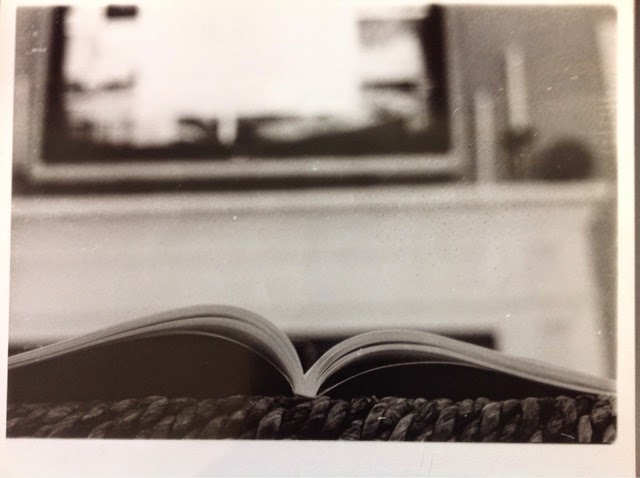
This image is relatable to the great majority of academics. Those who restrict their social life because they do not have enough time and energy to juggle both a social and academic life proficiently. I decided not to incorporate the rule  of thirds too much in this image, but the division of the pages in the book would be able to give it that effect. When taking this photo, I decided to turn on the television in the background to give a perspective of an attempt to compensate for their lack of a social life by diving into the digital world, whether it be games, shows, movies, etc. I decided to use a shallow depth of field to put great emphasis on the book, showing the priorities in this image.
This photo illustrates a peaceful environment in which, a balance of objects is in play. There are two chairs, representing the perspective of two different people as there is a divide in the background. The background splits from a natural perspective on the left, to a geometric perspective, showing a divide of natural and artificial. While the two chairs represent the presence of two people, their perspectives place them in their own separate world, and even as a whole, the image seems to be in a seclude, enclosed environment. I played with the rule of thirds in this image, diving the two chairs on the sides with a shared table between the two. There is a shallow depth of field as their directional perspectives do not offer a wide point of view from each chair.
This image gives the viewr insight into the lifestyle of being an athlete, putting great focus on the basketball as it is a personal favorite of mine. Through the incorporating of the basketball, not only is this photo illustrating the priorities of an athlete, but iit holds great importance to myself. I chose to incorporate the rule of thirds, putting emphasis on the foreground with basketball on the left, while leaving the background rest of image to being somewhat empty, showing the priorities of the athlete. There was a wide depth of field in this image, leaving the viewers with a wide view, however empty with meaningless detail to put emphasis on the basketball.
This photo depicts a pool table, with a solitary stick, allowing the viewer to infer that the player of this game is alone, fofllowing the guidelines set by my adjective "isolated". In the background, the blinds are shut, closing the player off from the outside world, leaving the player by themself. While the rule of thirds is not too present, the cue ball in relation to the rest of them would be divided by such as principle, with the cue stick on the right to balance the rest of the image. There is an extremely shallow depth of field, offering close to no background in relation to the foreground, focusing almost entirely on the pool table and the viewer themselves.

Monday, October 13, 2014

Pinhole Camera

Conceptual Intentions
What did you find meaningful about the process and practice of this project? Where does your voice and style as an artist emerge in this project? If you did not find the practice and process meaningful or you do not feel that your voice emerged in this work, why not?

I think it was very rewarding to be able to create the camera yourself. The whole process allowed me to think differently as a photographer. My style emerged through the incorporating of natural object with geometric objects, I found that this juxtaposition crated scintillating imagery.

Stretch and Explore
What challenges did you face over the course of this project? what changed over the course of your project?  What opportunities or occurrences led to these changes? Given what you know now about building a camera, how might you have changed your concept or approach to working?

For a limited period of time, my pinhole camera was not functioning correctly, but after one class, I was able to resolve this issue and return to a state where I could properly take pictures. But after figuring this issue out, I found a new style to taking pictures, further emerging me in the ever so rewarding process.
Formal Intentions

How have you deepened your understanding of photography in this project? Describe your pinhole prints. Please upload at least three examples to your blog.

I cannot find my pictures.

Friday, September 19, 2014

Adjective

I found the term "isolated" to be an intriguing adjective as it provides the viewer of the artwork with a level of depth and emotion that only furthers their interest in said piece. Isolated describes an object which is singularly represented and seems to be distanced from any other object; almost as if it were in its own world. The word seems to have characteristics that one could see as sad, solitary, and can be seen as an introvert. I feel like this is a good word to focus my art on because not only with it further my level of depth and emotion in my art, but it will allow me to better understand the necessary techniques to use on a camera in order to obtain such a photo (f-stop, shutter speed, ISO; etc.).

Wednesday, June 4, 2014

Final Blog Reflection

Which project do you consider your most successful? How did you develop your craft with this assignment? What tools, methods and materials were essential to your success with this project? What ideas, feelings or meanings did you want your piece to express? How did you go about expressing it? 

I would consider my pop art project to be my most successful of the year. Through this project, I developed my craft by delving into a deeper understand of the juxtaposition of various colors and what makes each color work. I was able to obtain a more vast comprehension of line quality through the working with various brush strokes. The tools that were essential to the success of this project was paint, a brush, creativity, and and understanding of color combinations and how each color works with one another. I felt that the roundness of the binoculars gave off a relaxed state, which is why I chose to primarily work with cooler colors, and a relaxed state is what I wanted my project to express. I also worked with rounded brush stroked to give a sense of depth and 3-dimensional figurative shape.

Which project was the most challenging? Look at your brainstorming or original intentions for this project. How does the final work(s) resemble your preliminary sketches or plans? What changed? Why did you make the changes that you did? What problems emerged in the creation of this project? How did you solve the problems? 

I found the plaster sculptures to be the most difficult because my original intentions for the project proved too hard to sculpt, so I was forced to create another figure from scratch. This figure resembled my original figure, but was altered in certain areas. I found my end result to be much bulkier than my original intentions with much more area to create a lerger sense of directional movement. I made the changes that I did because my original clay scultpure proved to be too difficult tto sculpt in such a limited amount of time, but I fixed those by creating a figure that resembled that of the original with stronger line quality and directional movement.

Please discuss three new strengths you've discovered or deepened this year. One formal strength (your ability to work with things like composition, balance, rhythm et cetera), one technical or media-specific strength (working in a specific medium or honing a specific skill) and one conceptual strength (your idea development in the specific project). 

Three new strengths that I have developed over the year was the conceptualization of figures, the representation of line quality, and the juxtaposition of certain colors with one another. One formal strength that I have developed over the year, was balance. Working with Ms. Seal gave me a much deeper understanding of balance, which I have learned to incorporate into my works such as painting, drawing, photography, etc. One technical strength that I have formed over the course of this year, was working with nature in photography. I have recently been able to work in natural environments and have found it to be intriguing, making for very interesting pictures. And finally, one conceptual strength I have developed was the ability to visualize what areas of my project need to be strengthened, and what each area of a project represents and how it does so.

Wednesday, April 30, 2014

Plaster Texture Sculptures

In this project, our class worked to create an interesting plaster sculpture that created a sense of texture, and as a result I made this sculpture. While working with this sculpture I did run into many problems, the majority of which was the lack of interest and flow this sculpture had. It had many interesting qualities to it, but was so segmented that it did not flow and work together to create one piece of art, but rather many different smaller pieces of art. To connect these qualities, I created a beam, connecting the left to the right, the front to the back. But as I did so, it still lacked abstracted qualities and the flow I was looking for, so I added another level to give the sculpture a sense of depth. Then I was left with another simple, but very large problem. We were working to create a sculpture that portrays texture, and I did not have texture. In this process of using the many tools I did to create a basic outline of the sculpture, I found one to create a particular interesting sense of texture, and that was the cylindrical grater. So after completing, the basics of my sculpture, I used the grater to create a sense of depth and texture, which shown to be very interesting in the light when taking picture because the contrast between light and dark in this picture, really captures the texture and overall objective of the project.

Towards the beginning of this project, I found myself wanting to work with skinnier, smaller sculptures, but along the way discovered that I preferred using sculptures with a larger base, for it allowed for more interesting qualities such as depth, and more space for texture and abstract qualities. But in hindsight, I think that I would have liked to play a little more with a sense of balance, potentially creating a more interactive piece of art. But for a mid-project concept change and the end result created by that change in concept, I am very pleased with my work and believe that I has allowed to create more interesting line quality and given me a better perspective on textures. Due to this newfound perspective on textures, I believe that it will not only help me in future sculpting projects, but all art projects and pieces across the board.

Tuesday, March 18, 2014

1. How did you develop your craft with digital camera and photoshop in this project? What tools, methods and materials were essential to your success? How did you use your skills of observation? 
I used my capabilities with a digital camera to take a gray scale picture, allowing me to see a larger contrast in light and dark, giving the shadows more visibility. Allowing to see these differences created a large impact in my painting, as I was able to more precisely shade in and paint these contrasts. My usage of digital technology and observational skills created for a more precise and expressive painting.
 
2. Explain the choices you made concerning the design of your color palette for the digital diptychs and your paintings:
 
a. Did the process of“finding examples”and creating diptychs influence your later painting choices? 
The process of finding example and creating diptychs influenced my choices in painting. I found myself intrigued by cool colors such as blue and green. The cool colors allowed for the creative pairing of diptychs. I separated multicolor paintings and single color paintings. The pairing of cool colors created reasonable diptychs.
 
b. Explain how the“expressive”and/or“formal”qualities of color influenced your choices.
I found there to be much contrast from light to dark, creating expressive line qualities and offering opportunity for  the creation of expressive painting. These cool colors that I used tend to easily differ from light to dark, allowing me to create the contrasts in color.


3. How did you develop your craft of painting? What did you learn about the“tools”of painting? Which specific insights gained in your practice led directly to your becoming a more confident “painter”? How did you use your skills of observation? 
With each painting, I experimented with different brush strokes, creating unique textures and expression of line quality. Using these different painting techniques allowed me to become more confident in the future as I continue to paint, I will have a wider variety of painting styles to select from. 


4. How has this project taught you to observe color? 
This project has taught me to observe color as I know the effects of using cool and warm colors and its contrast when separating light and dark colors.

Thursday, March 6, 2014

Color Scheme Paintings


This project is not currently complete, but it is a work in progress. Both paintings are of the same object, but using different color schemes and painting styles. My left painting is monochromatic, using  abrupt changes in color, creating for a unique composition. My right painting is triadic, using stippling, creating texture on the painting.